A very common situation today, which is probably responsible for a great deal of modern anxiety about failing memory, is that where we're required to “multitask”, that trendy modern word for trying to do more than one thing at a time. It is a situation for which both the normal consequences of aging and low working memory capacity has serious implications.
Articles
The effects of exercise on cognitive function in older adults
A number of studies in the past few years have provided evidence that physical exercise can ameliorate the effects of aging on the brain, in terms both of preventing or postponing dementia, and reducing the more normal age-related decline in cognitive function. The reasons for the effect are almost certainly multiple, for example:
When considering what will be the most effective strategies for you, don't forget the basic principles of memory:
(1) Repetition repetition repetition
The trick is to find a way of repeating that is interesting to you. This is partly governed by level of difficulty (too easy is boring; too difficult is discouraging). The point is to find an activity (more than one, in fact), which enable you to hold on to your motivation through sufficient repetitions to drive them into your head. Bear in mind, too, the importance of:
(2) Changing context
Traumatic brain injury is the biggest killer of young adults and children in the U.S., and in a year more Americans suffer a TBI than are diagnosed with breast, lung, prostate, brain and colon cancer combined. There are many causes of TBI, but one of the more preventable is that of sports concussion.
Find out about the pegword mnemonic
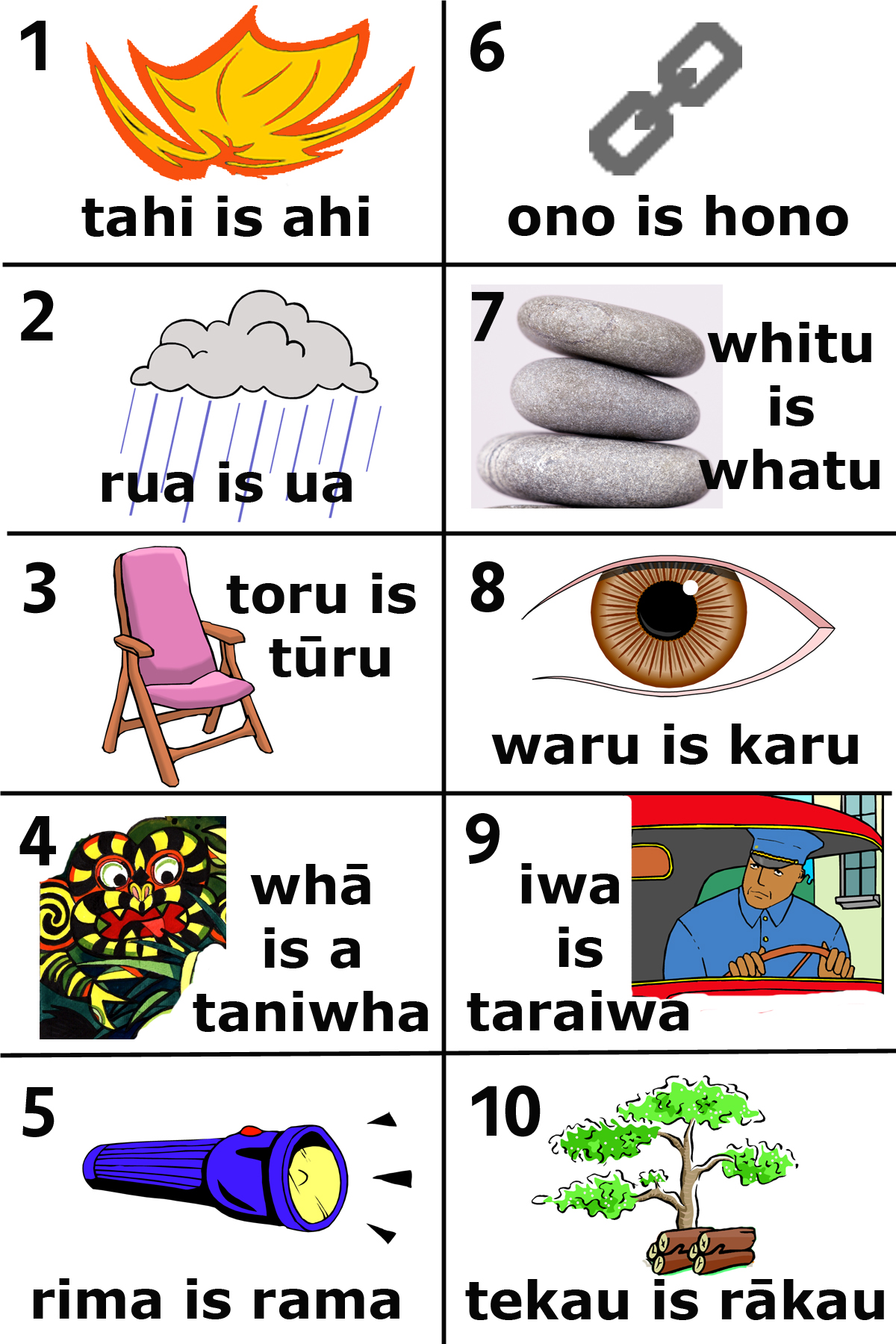
To celebrate Māori Language Week here in Aotearoa (New Zealand), I've put together a pegword set in te reo:
- tahi — ahi
- rua — ua
- toru — tūru
- whā — taniwha
- rima — rama
- ono — hono
- whitu — whatu
- waru — karu
- iwa — taraiwa
- tekau — rākau
As I said in my discussion of different scripts, the Hellenic languages use the Greek alphabet. Here it is. I’m afraid the table is a little complicated, because (a) each letter has a name, which it’s useful to know, and (b) there are some differences in pronunciation between Ancient Greek (which is still a language that people want to learn today), and Modern Greek.
Broadly speaking, a concept map is a graphic display that attempts to show how concepts are connected to each other. A concept map is a diagram in which labeled nodes represent concepts, and lines connecting them show the relationships between concepts.
There is one type of concept map you’re probably all aware of — mind maps. Mind maps are a specialized form of concept map popularized very successfully by Tony Buzan.
A mind map has four essential characteristics:
The limitations of working memory have implications for all of us. The challenges that come from having a low working memory capacity are not only relevant for particular individuals, but also for almost all of us at some points of our lives. Because working memory capacity has a natural cycle — in childhood it grows with age; in old age it begins to shrink. So the problems that come with a low working memory capacity, and strategies for dealing with it, are ones that all of us need to be aware of.
While parents and teachers have always strongly supported small class sizes, their belief has not always been supported by evidence. Part of the problem lies in that word “small” — what constitutes a small class? Different interventions have looked at reducing class sizes from 40 to 30, or 30 to 25. It may well be that such reductions are not sufficient to show clear benefits.
What do we mean by word-finding problems?
Here are some examples:
- increasing use of circumlocutions rather than specific terms (e.g., "I wonder where the thing that goes here is")
- use of empty phrases, indefinite terms, and pronouns without antecedents (i.e., referring to something or someone as "it" or "him / her" without first identifying them by name)
- increased frequency of pauses
These problems are all characteristic of Alzheimer's, but also, to a much lesser extent, of normal aging.